Summary: One-off unconscious bias training is ineffective; lasting change requires ongoing, system-level interventions. Recent research shows that repeated practice, measurable goals, and integrating bias awareness into decision processes improve workplace equity. HR should focus on tracking systemic metrics like promotion and retention, and combine awareness with structured decision tools for real impact.
New evidence is forcing a reset on Unconscious Bias work. In July 2026, a field experiment found an accountability step still failed to close racial gaps in ratings across 3,266 managers and 17,149 employees. That matters because many firms still fund Diversity Training and Bias Awareness with little proof of better decisions. This article reviews the latest Unconscious Bias research, practical benchmarks, and what experts now trust to make Unconscious Bias efforts stick.
What the newest research says about unconscious bias awareness in 2026
One clear pattern stands out in 2026: short, one-off awareness sessions are losing credibility. A 2025 randomized study found that an 11-day racial equity challenge improved knowledge, self-belief, and responses to ambiguous workplace moments, which points to a simple lesson – repeated practice beats a single workshop (multi-day racial equity challenge study). A 2026 framework, the MAIBE Checklist, makes the same case. It says bias education works better when it is:
Measurable
Participant-led
Part of a wider system
Broad, not light-touch
Evidence-based
Awareness still matters. It just works better when it links to daily decisions, manager habits, and real follow-up.
Accountability also looks weaker than many teams assumed. A 2026 field experiment covering 3,266 managers and 17,149 employees found that a standard accountability prompt did not close racial gaps in performance ratings (2026 accountability field experiment). So the new research points away from stand-alone fixes and toward stacked interventions:
How organizations are redesigning bias awareness programs to work better
Teams are moving past one-off workshops. The better model treats bias awareness as education plus system change, not a single event. For the bigger picture, link this section back to the parent pillar on Latest Trends and Insights in Unconscious Bias Awareness 2026.
The MAIBE checklist in plain English
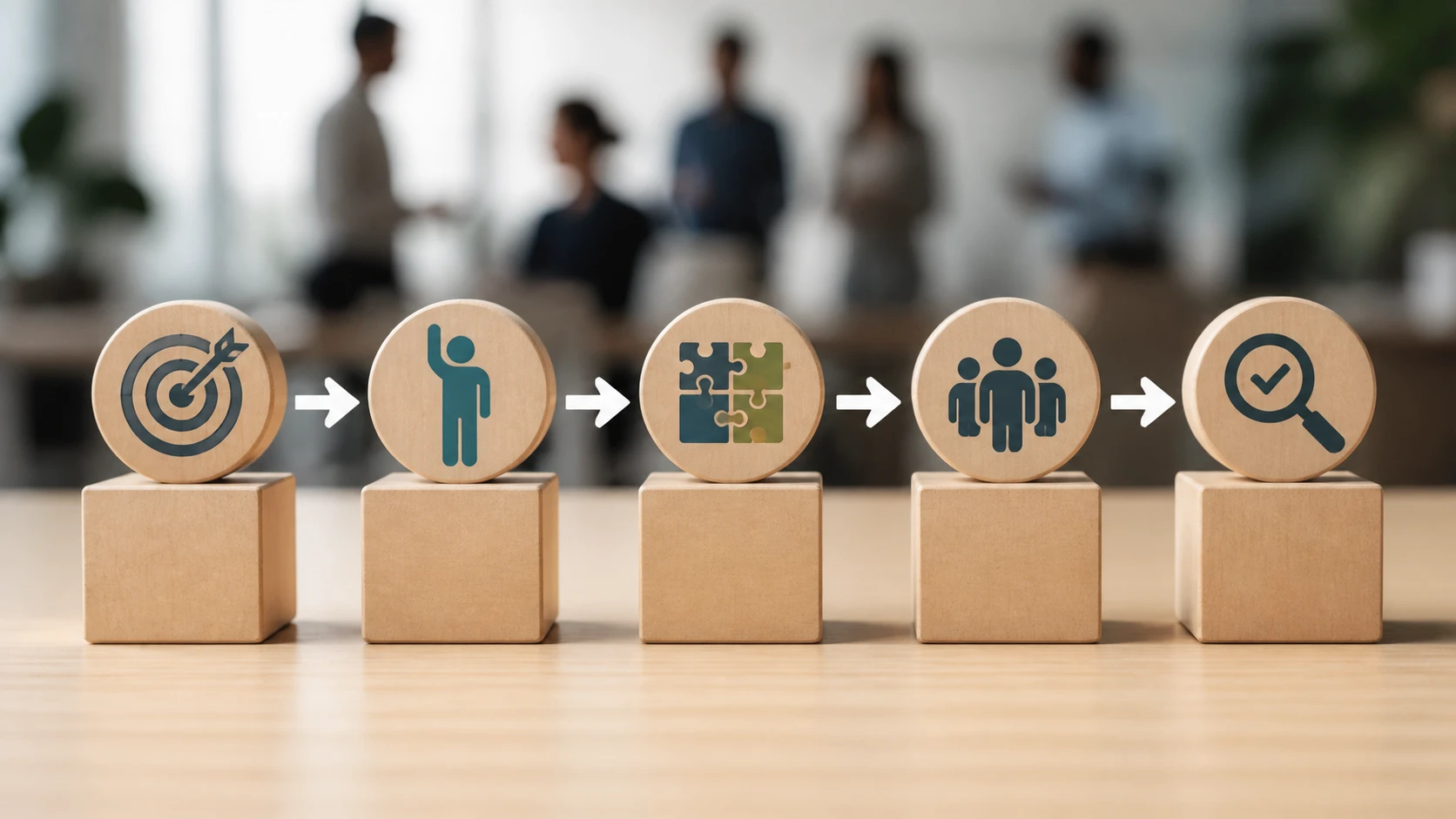
A useful 2026 frame is the MAIBE checklist. In plain terms, it asks five basic questions:
Measurable – Did you set clear goals?
Agentic – Do people practice real choices, not just listen?
Integrated – Is this tied to hiring, reviews, and promotion?
Broad – Is it more than a light-touch session?
Evidence-based – Are you using methods backed by research?
Modern office meeting with flowchart on screen
If your program cannot answer all five, it is probably too thin to change workplace habits.
What the evidence says about behavior change
The pattern is clear. Training alone may raise awareness, but stronger results come from redesigning decisions. A 2025 systematic review found that systemic strategies like standard rubrics, decision protocols, and structured prompts beat attitude-only approaches in high-stakes judgments systematic review findings.
Redesign move
Why it works
Structured interviews
Cuts gut-feel judgments
Work sample tests
Focuses on actual skill
Batch comparisons
Reduces stereotype-based picks
Harvard’s evidence-based workplace practices points in the same direction. The best programs add checklists, scorecards, and manager accountability. Awareness still matters. It just works better when the process changes too.
What HR teams should measure before calling a program successful
Attendance is easy to count. It is also a weak success metric. HR should track what changed after the program across the talent cycle, not just who showed up. SHRM notes that stronger organizations monitor equity across hiring, promotion, pay, development, and retention, not only recruiting or new hires regularly monitor DE&I data.
Shortlist and hiring rates by group
Promotion and stretch assignment access
Performance rating gaps
Retention and exit themes
Employee survey scores on fairness, belonging, and trust
HR professional analyzing diversity dashboard on computer
Bias awareness works best as one tool inside a wider system. Research reviews show structural interventions often beat awareness alone, and targeted training tied to real decisions can improve outcomes systematic review of interventions.
Use a simple mix:
Awareness training for shared language
Structured hiring and promotion rubrics
Manager checks before key people decisions
Regular data reviews with action owners
Homepage
Ready to move past one-off bias training? Amplify DEI helps leaders build practical, lasting awareness programs that change workplace habits.
Frequently Asked Questions
Q1: What are the latest insights and strategies for increasing unconscious bias awareness in 2026?
Use short, repeated learning tied to hiring, feedback, and promotion decisions. Pair awareness with behavior checks, manager practice, and clear accountability. One-off sessions fade fast.
Q2: How can organizations measure and effectively counteract unconscious bias in diverse workplace environments?
Track promotion rates, performance scores, interview outcomes, and exit data by group. Then audit patterns, train decision-makers, and fix weak points in systems, not just attitudes.
Q3: What are proven tactics to implement successful unconscious bias training and boost inclusivity at work?
Focus on real scenarios, manager coaching, and follow-up habits. Good programs build skills like structured interviews, fair feedback, and meeting inclusion. Amplify DEI often stands out by linking training to culture change.
Conclusion
The main lesson is simple: one-off bias training is weak on its own. Recent evidence points to broader, measured, system-level fixes, as shown in a 2026 field experiment and the MAIBE framework.
Summary: Employee Resource Groups are formal, goal-driven groups that boost participation, retention, and leadership visibility, especially when structured with clear goals and sponsorship. Affinity networks are informal, community-led groups that build trust quickly and are easier to join but may struggle with policy influence. Leaders should choose ERGs for measurable impact and affinity networks for quick connection, tailoring governance to their needs.
Leaders trying to lift belonging and participation face a clear tradeoff. ERGs usually work best as formal engagement infrastructure, while Affinity Networks fit low-friction community and early trust-building. Many teams now weigh Affinity Networks against ERGs because the model shapes voice, visibility, and uptake. This comparison draws on common HR and DEI practice to show how Affinity Networks, Employee Networks, sponsorship, governance, and DEI Strategies affect engagement.
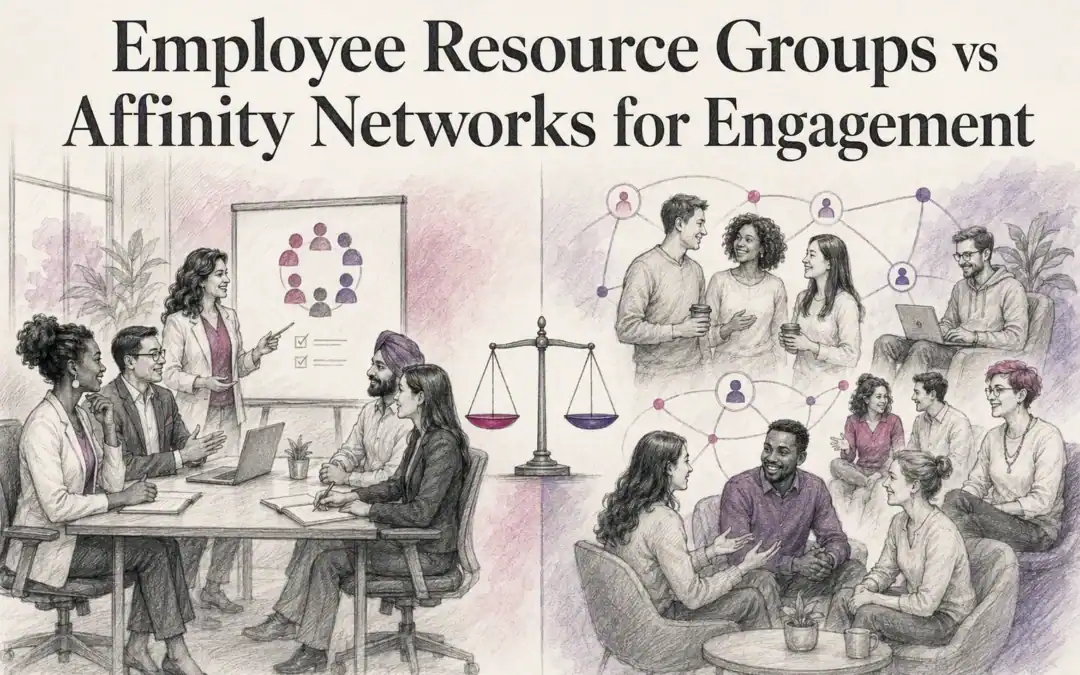
Employee Resource Groups vs Affinity Networks for Engagement: At a Glance
ERGs are formal, employee-led groups built to support belonging and business goals. Research from NASA ERG guidance shows they often help with development, retention, and leadership connection, so they fit mature DEI programs that need clear structure and measurable impact.
Affinity networks are lighter, community-led groups built around shared identity, interest, or experience. They suit teams that want faster trust-building and easier participation, especially early in their inclusion work, with a more informal model than chartered groups.
How Structure Changes Engagement
Why Formality Can Increase Participation
Formal ERGs often get better turnout because they feel real. A charter, budget, sponsor, and clear roles reduce confusion. People know who can join, what the group does, and how ideas move up. Harvard Business School notes that ERGs work best when they balance formal support with everyday connection HBS research. Formal setup also helps leaders protect time, track goals, and keep momentum when volunteer leads change.
Split scene of formal ERG meeting and informal employee network gathering
Why Lighter Networks Can Feel More Accessible
Affinity networks often feel easier to join because they ask less upfront. No election, no committee, no long plan. That lowers the social risk for new members, allies, and busy managers. A Colorado state ERG guide also stresses that open participation supports inclusion and belonging state guidance. The tradeoff is reach. Light networks can create trust fast, but they may struggle to win budget, executive attention, or policy change.
Good engagement programs do not run on energy alone. They need rules, owners, and proof.
What Leaders Need to Measure
Track more than attendance. Measure participation rate, repeat attendance, leader pipeline, budget use, and whether insights led to policy, talent, or culture changes. Korn Ferry notes ERGs now sit at the intersection of engagement, retention, and business results in its global ERG survey.
Metric
Why it matters
Participation depth
Shows real pull, not one-time interest
Retention and mobility
Connects groups to talent outcomes
Action taken
Proves feedback changed something
If you only count events, you are measuring activity, not impact.
Where Governance Protects the Program
Strong governance lowers risk. Harvard Business School highlights four tensions – formality, audience, identities, and resilience – that shape whether ERGs thrive in hard moments in its Working Knowledge research.
Set a clear charter.
Define sponsor duties.
Create approval paths for budget and events.
Review membership and privacy rules.
ERGs need tighter governance.
Affinity networks can stay lighter, but still need boundaries.
Choose ERGs when you need accountability. Pick ERGs if you want clear goals, budgets, sponsors, and reporting. That structure helps leaders act on employee insight instead of just hearing it. Harvard Business School notes strong ERGs balance informal support with formal action, while Gallup says managers drive 70% of team engagement variance Harvard researchGallup data.
HR leader reviewing ERG charter with executive sponsor in modern office
Choose affinity networks when you need accessibility. Use affinity networks when your goal is easy entry, fast peer connection, and broad participation. They work well in new, global, or low-maturity programs where employees first need trust and community.
If engagement is low, start with access. If follow-through is weak, move to ERGs.omepage
Need clearer ERG or affinity network strategy? Partner with Amplify DEI to build governance, sponsorship, and engagement that lasts.
Frequently Asked Questions
Q1: What are the key differences between Employee Resource Groups and Affinity Networks for workplace engagement?
ERGs usually have formal goals, leaders, budgets, and executive sponsors. Affinity networks are often looser, social, and interest-led. ERGs drive business impact more directly, while affinity networks can boost connection fast with less structure.
Q2: How can organizations effectively implement and support different types of Employee Resource Groups globally?
Start with one governance model, then adapt for local laws, culture, and language. Set clear charters, funding rules, and sponsor roles. Give regional leaders room to tailor events and priorities without losing global standards.
Q3: What leadership roles are essential for the success of Employee Resource Groups to maximize employee engagement?
Strong ERGs need an executive sponsor, ERG chair, local chapter leads, and HR or DEI support. Each role should own decisions, budget, communication, and metrics so the group does not rely on volunteer energy alone.
Conclusion
ERGs usually drive stronger engagement when they have clear goals, sponsors, and governance. Affinity networks fit lighter community-building needs. Recent CHRO research and Harvard analysis both point to the same truth: structure shapes impact.
Vivian Acquah is a professional event moderator and inclusive facilitation specialist who helps organisers create events where every voice is heard, every topic is handled with care, and every audience member feels welcome. Whether your event tackles sensitive topics or simply needs to run with energy and purpose, Vivian brings the expertise to make it happen.
A great event is more than a well-timed agenda. It is a space where people feel respected, represented, and engaged. Yet without the right moderator, even the best-planned events can fall flat; conversations stall, sensitive topics are avoided, and some voices dominate while others go unheard.
That is where inclusive moderation changes everything.
As a certified Cultural Intelligence (CQ) facilitator and inclusion strategist, Vivian Acquah does not just manage the flow of an event. She shapes the conditions for meaningful dialogue. Her work is grounded in years of experience guiding organisations, including Heineken, Deloitte, KLM, Cargill, Vodafone-Ziggo, and Indeed, through complex conversations on diversity, equity, and inclusion. She understands how to create environments where people feel safe enough to speak honestly and open enough to listen deeply.
The result?
Events that do not just run smoothly; they leave a lasting impression.
What Vivian Acquah Brings to Your Event
Bilingual Fluency in English and Dutch
Vivian facilitates with equal confidence in both English and Dutch, making her the ideal choice for international events, cross-border organisations, and multilingual audiences. Language should never be a barrier to inclusion, and with Vivian, it never is.
Expert Room Reading for a Seamless Event Flow
Vivian has a sharp instinct for the energy in a room. She reads the mood of an audience in real time, adjusting the pace, tone, and structure of your event to keep engagement high and momentum strong. No awkward silences. No sessions that run off track. Just a polished, professional experience from start to finish.
Facilitation of Courageous Conversations
Some of the most important conversations are also the most difficult to have. Vivian specialises in facilitating dialogue on sensitive and complex topics — from bias and microaggressions to leadership culture and organisational change — with a calm, structured, and productive approach. She does not shy away from difficult subjects. She leads through them.
Active Listening with a Sympathetic and Respectful Approach
Vivian’s facilitation style is built on genuine listening. She creates space for every participant to feel heard, acknowledged, and valued — whether they are a senior leader or a first-time attendee. Her empathic ability and goal-oriented approach ensure that dialogue stays constructive, even when emotions run high.
Cultural Intelligence (CQ) and Inclusion Strategy
Vivian is a certified CQ facilitator with a proven track record of boosting inclusion and managing respectful, productive sessions across diverse cultural contexts. She understands that inclusion is not a one-size-fits-all solution — and she adapts her approach accordingly, drawing on deep knowledge of Cultural Intelligence, intersectionality, and organisational design.
What It Is Like to Work With Vivian
For event organiserss, working with Vivian means confidence. From the initial briefing to the final session, she takes the time to understand your goals, your audience, and the nuances of your event. She handles the complexity so you do not have to.
For audiences, the experience is one of energy, respect, and genuine engagement. Vivian has a natural ability to connect people — to a topic, to each other, and to a shared sense of purpose. Participants leave not just informed, but inspired to take action.
Her approach simplifies complex topics without diminishing them. She makes DEI and inclusion accessible and actionable — not overwhelming — so that people move forward with clarity, not confusion.
Whether your event brings together 30 people or 3,000, Vivian ensures that the conversation is one worth having, and one that people will remember.
Frequently Asked Questions
What types of events does Vivian Acquah moderate?
Vivian works across a wide range of event formats, including corporate conferences, panel discussions, leadership summits, DEI workshops, town halls, and internal team sessions. If your event involves people and conversation, Vivian can help shape it.
Can Vivian Acquah facilitate events in both English and Dutch?
Yes. Vivian is fully bilingual and can moderate, facilitate, and engage audiences in both English and Dutch — making her well-suited to international or multilingual events.
How does Vivian Acquah approach sensitive or controversial topics?
Vivian has extensive experience facilitating courageous conversations on topics such as bias, equity, inclusion, and organisational culture. Her approach is structured, empathetic, and always focused on productive outcomes. She creates psychological safety without avoiding the difficult questions.
Is Vivian Acquah available for virtual, hybrid, and in-person events?
Yes. Vivian is experienced in moderating events across all formats, in person, online, and hybrid, ensuring the same standard of energy, inclusivity, and professionalism regardless of the setting.
How far in advance should I book Vivian?
To secure your preferred date, it is recommended to reach out as early as possible. For larger events, booking several months in advance is advised. Click here to check availability.
Make Your Next Event One That Truly Includes Everyone
Your event deserves a moderator who brings both professional rigour and genuine care to the room. Vivian Acquah combines deep expertise in Cultural Intelligence, DEI strategy, and inclusive facilitation with the presence and warmth that keeps audiences engaged from the first session to the last.
Do not leave the success of your event to chance. Book Vivian Acquah and give your event the foundation it deserves.
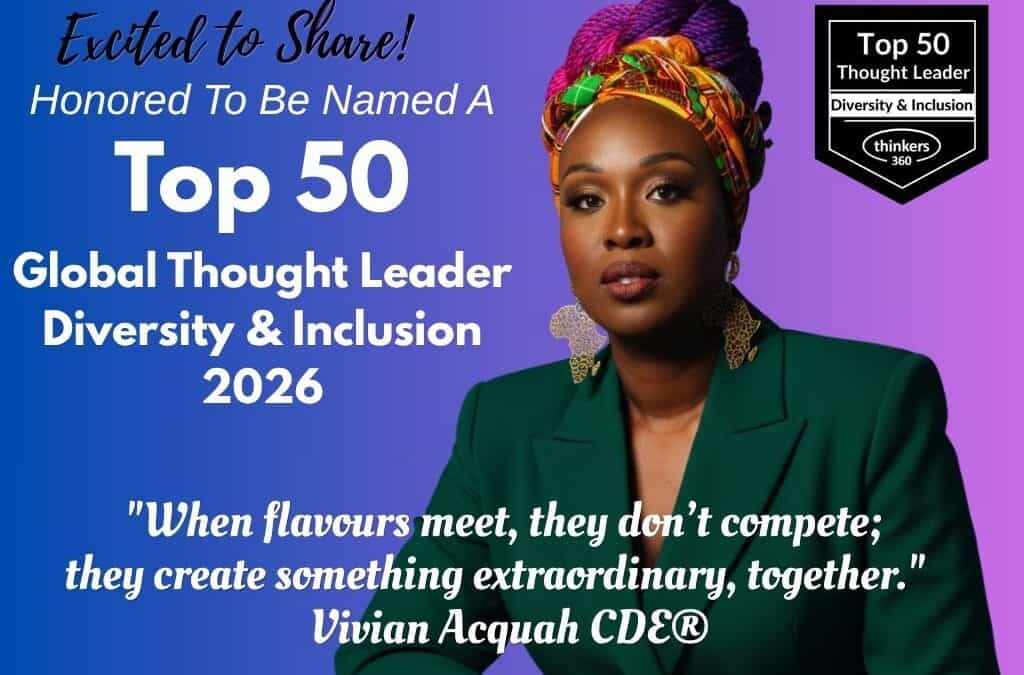
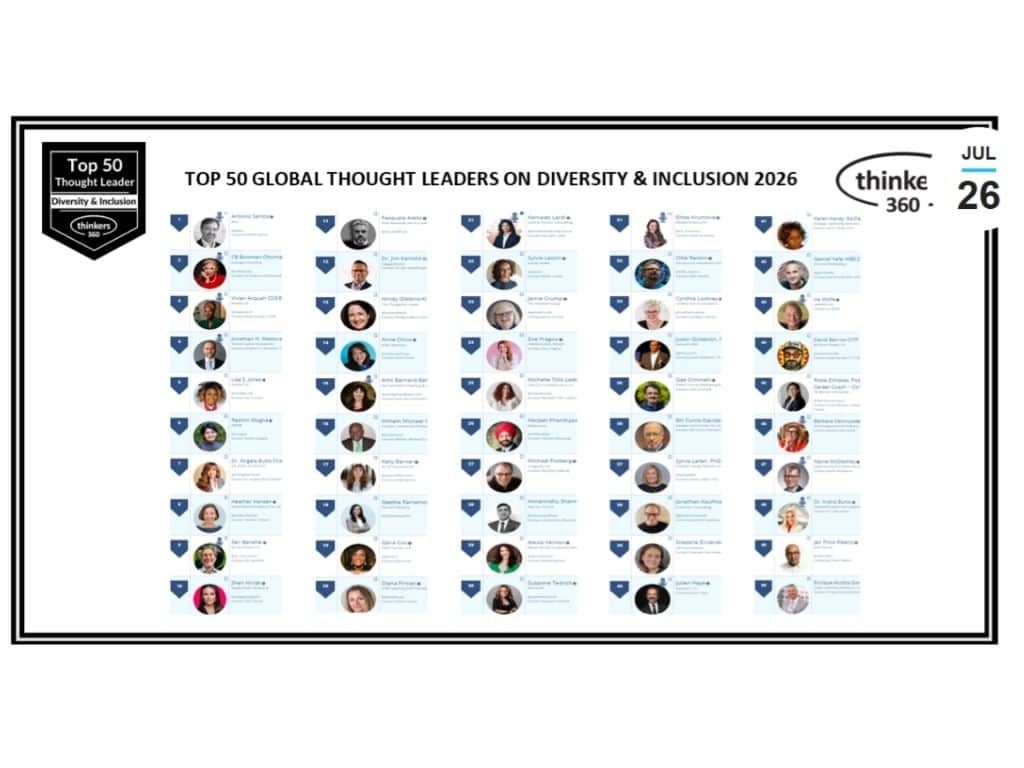
Thinkers360 has named me one of the Top 50 Global Thought Leaders and Influencers on Diversity and Inclusion for 2026. I finished in the top 3.
I am honoured. I want to be honest with you about why.
The recognition is about the work, not the title
A ranking does not change the state of inclusion in any workplace. People do. So when I saw the result, my first thought was not about my name on a list. It was about the daily choices that put it there.
I think about a client who worried her team stayed silent in meetings. We worked together for three months. We changed one thing at a time. She started asking quieter colleagues for their view before the loud voices took over. Within weeks, two team members shared ideas that reshaped a stalled project. That is inclusion in practice. Small, repeatable, real.
This recognition belongs to that kind of work. It belongs to every leader who chose action over intention.
Standing beside leaders who build change
The other names on this list matter to me.
These are people who do more than speak. They test ideas, publish research, and challenge systems that keep the same people in power. Being counted among them raises my own standard. It reminds me that thought leadership means nothing without proof.
You can see this in the field itself. Companies spent around 8 billion dollars on diversity efforts in 2017, yet representation moved slowly. Money alone did not fix the problem. What worked was a shift from tolerance to real inclusion, then to belonging. The leaders on this list understand that difference. So do I.
Three lessons I keep returning to
Here is what I have learned, and what you can apply this week.
Inclusion is a skill, not a slogan. You practise it the way you practise any skill. Ask one person for their input before you decide. Notice who never speaks, and open the door for them.
Cultural Intelligence turns intention into action. CQ has four parts: drive, knowledge, strategy, and action. Start with drive. When I moved to a new country, my comfort in speaking with people from other cultures grew because I chose to engage. Your motivation shapes your ability. Build it on purpose.
Belonging is built moment by moment. One client ran a two-hour session on how a team agreed its ways of working. That single conversation made a preclinical safety team feel seen, and the project ran faster. You do not need a huge budget. You need deliberate moments.
Thank you to my clients
To the clients who trusted me, thank you. You let me help you build braver and kinder workplaces. This result is yours as much as mine. You did the harder part. You changed how you lead.
You showed me what happens when a leader stops waiting for permission and starts making inclusion the norm.
An invitation to future clients
If you want to take inclusion further, I want to work with you.
I do not offer a one-size-fits-all toolkit. I help you read your own context, then design practical steps that fit your people and your purpose. We look at how you make decisions, how you share information, and where exclusion hides. Then we build a system that lasts.
The next level of inclusion is not louder. It is more skilled, more consistent, and more human.
Here is one question to sit with today. What is one small action you will take this week to help someone feel they belong?
Answer it. Then do it. That is where real change starts, and that is the work I am proud to keep doing with you.
What does it take for a group of people to truly work together at their best? It’s not about simply putting them in a room and hoping for the best. It’s about creating an environment where ideas are shared openly, communication flows freely, and decisions are made with purpose. This is where inclusive workshop facilitator come in. By bringing objectivity, expertise, and a tailored approach, they have the power to transform teams, boosting not just performance, but morale and alignment too.
What Does an Inclusive Workshop Facilitator Do?
The role of an inclusive workshop facilitator is multifaceted. At their core, they help groups work more effectively, whether that’s solving problems, clarifying strategies, or brainstorming innovative ideas. But beyond their logistical role, facilitators create a safe space for open, honest conversations. They ensure every voice is heard, disagreements are handled constructively, and teams leave with tangible outcomes.
Their work isn’t about dictating; it’s about fostering collaboration. By focusing on inclusivity, facilitators encourage teams to explore diverse perspectives. This kind of engagement doesn’t happen by accident; it’s carefully designed and skillfully guided.
Types of Workshops They Facilitate
The variety of workshops supported by an inclusive facilitator is immense, offering wide-ranging benefits depending on the organisation’s needs. Here’s a look at some of the most impactful types.
Problem-Solving Workshops
When a team faces a complex challenge, a workshop facilitator is key to unlocking solutions. Through guided exercises, they promote creativity and encourage groups to reframe the problem. Sometimes, all it takes is one shift in perspective to uncover a breakthrough.
Strategy Development Sessions
Strategic alignment is essential for any team. Facilitators help organisations zero in on their biggest challenges and set priorities, ensuring everyone is working toward the same goals. These sessions provide clarity, turning confusion into direction.
Leadership Development Workshops
Building strong leaders is critical for long-term success. Facilitators lead sessions that strengthen leadership skills, provide actionable insights, and inspire growth. It’s not about one-size-fits-all advice; it’s about helping leaders adapt and excel within their specific contexts.
Design Thinking Sprints
Design thinking is all about generating creative solutions. Facilitators use this methodology to guide teams through ideation and prototyping, empowering them to quickly test and refine ideas. Whether it’s for a product, service, or process, design sprints encourage bold thinking and rapid experimentation.
Team Building and Hackathons
Team dynamics matter. Building trust, cohesion, and effective communication aren’t optional; they’re necessary for high-performing teams. Facilitators lead team-building workshops and even hackathons to strengthen bonds, address tensions, and boost collective problem-solving.
Retrospectives
Looking back isn’t just about reflecting; it’s about learning and improving. Facilitators create the structure for effective retrospectives, where teams can celebrate successes, unpack challenges, and explore what could have been done differently. These honest conversations can spark real growth.
Team Retreats
Sometimes, stepping outside of the office is exactly what a team needs. Retreats led by skilled facilitators encourage deeper reflection, creative thinking, and a renewed sense of connection. Facilitators ensure these sessions are not just productive but also enjoyable.
The Benefits of Facilitated Workshops
Inclusive workshops aren’t just about ticking boxes; they’re about unlocking potential. Here are some key benefits these sessions bring to the table.
Igniting Creativity
A workshop facilitators know how to guide teams out of their usual thought patterns. With fresh perspectives and structured activities, they encourage people to think differently. The results? Innovative ideas and creative solutions that might otherwise never see the light of day.
Achieving Alignment
Without alignment, even the most talented teams struggle. Facilitators bring focus and structure to discussions, helping groups clarify their objectives and priorities. By the end of a session, chaos turns into clarity.
Boosting Morale
Workshops shouldn’t feel like a chore. Effective facilitators inject energy and enthusiasm, making even serious discussions engaging and motivating. A well-run session leaves teams feeling more connected and confident in their abilities.
Improving Performance
The outcomes of a well-facilitated workshop are tangible. Whether it’s enhanced communication or more efficient collaboration, teams leave better equipped to tackle their challenges and achieve their goals.
The Investment vs. The Hidden Costs of Not Hiring
There’s no denying that hiring a professional workshop facilitator is an investment. But what about the costs of not hiring one? These hidden consequences can be far more expensive in the long run.
Lost Productivity
How often do meetings or brainstorming sessions stretch on without reaching meaningful conclusions? Without a facilitator, teams can easily lose focus, wasting hours spinning their wheels.
Team Misalignment
When people aren’t on the same page, efforts become redundant or worse: counterproductive. Misalignment breeds inefficiency, frustration, and sometimes even conflict.
Missed Opportunities
Opportunities for innovation don’t come around every day. And without someone to guide discussions and foster creativity, brilliant ideas can easily get lost in noise or hesitation.
Erosion of Morale
Poorly run workshops can drain energy and enthusiasm. When teams feel unheard or unsupported, disengagement follows. Worse, unresolved tensions can lead to lasting damage in relationships and workplace culture.
An inclusive workshop facilitator prevents these pitfalls, ensuring the time and energy spent in workshops yield results.
One of the unique advantages an external facilitator brings is their ability to read the room. They pick up on subtle dynamics that might escape notice, adjusting their approach to bring everyone into the conversation.
By staying impartial, they prevent dominant voices from overshadowing quieter participants. And their energy? It’s contagious. A talented facilitator knows how to lift a group’s spirits, turning dry topics into lively, engaging discussions.
Conflict doesn’t intimidate them, either. Instead, they leverage it. By guiding teams through disagreements constructively, facilitators help uncover powerful insights and solutions.
Mentorship for Leaders
It’s not just teams that benefit from facilitators: leaders do too. Acting as impartial advisers, facilitators provide a safe space for executives to think critically. With their outside perspective, they offer fresh ideas for handling sensitive challenges and navigating tough decisions.
For leaders, this relationship is about more than just guidance. It’s knowing there’s someone who genuinely listens and helps without bias, always steering toward the best outcome.
Driving Participation and Engagement
When facilitators take the reins, the atmosphere changes. Employees feel encouraged to speak up, even if their ideas challenge the norms. The inclusive environment makes room for dialogue, promoting creativity, trust, and engagement. These interactions spark new ideas, building momentum that carries beyond the workshop itself.
It’s Time to Transform Your Team
Inclusive workshop facilitators are more than just guides. They’re catalysts for change, helping teams unlock their potential one session at a time. From solving complex problems to strengthening relationships and aligning strategies, their value is undeniable.
What challenges is your team facing? What goals feel just out of reach? Partner with a facilitator and see the difference structured collaboration can make. By working together, you can foster fresh ideas, deeper connections, and lasting success.
Now is the time to invest in your team’s future. The results will speak for themselves.
What is the role of an inclusive workshop facilitator?
An inclusive facilitator helps teams work more effectively by creating a safe, open space where every voice is heard. They guide discussions, foster collaboration, and ensure teams leave with clear, actionable outcomes. Their focus on inclusivity encourages diverse perspectives and productive conversations.
What types of workshops do they typically lead?
Inclusive workshop facilitators tailor their expertise to various types of workshops, including: Problem-solving workshops for tackling complex challenges. Strategy development sessions for setting clear priorities. Leadership development workshops for building stronger leaders. Design thinking sprints that focus on creative ideation and prototyping. Team building activities or hackathons to strengthen relationships and collaboration. Retrospectives and team retreats to reflect, learn, and grow.
What are the benefits of having a facilitator-led workshop?
Facilitator-led workshops ignite creativity, boost morale, and align team objectives. They provide structure to discussions, help teams think outside the box, and ultimately improve performance. Teams leave with greater clarity, motivation, and actionable solutions tailored to their needs.
How does a facilitator handle team dynamics and conflict?
Facilitators are skilled at “reading the room.” They maintain impartiality to prevent dominant voices from overshadowing quieter participants. When conflicts arise, they turn disagreements into constructive discussions, fostering mutual understanding and uncovering valuable insights.
Why should teams invest in hiring an inclusive workshop facilitator?
Hiring a facilitator saves time, boosts productivity, and prevents misalignment. Without facilitators, teams often struggle with unfocused meetings, lost opportunities, and poor morale. A facilitator ensures sessions are engaging, effective, and generate tangible results.
What value do facilitators offer to leaders?
Facilitators support leaders as impartial advisors, offering fresh perspectives and strategic guidance. They create a trusted environment where leaders can approach sensitive challenges, refine ideas, and make better decisions with confidence.
By partnering with an inclusive facilitator, teams and leaders alike can unlock their full potential and achieve lasting success.
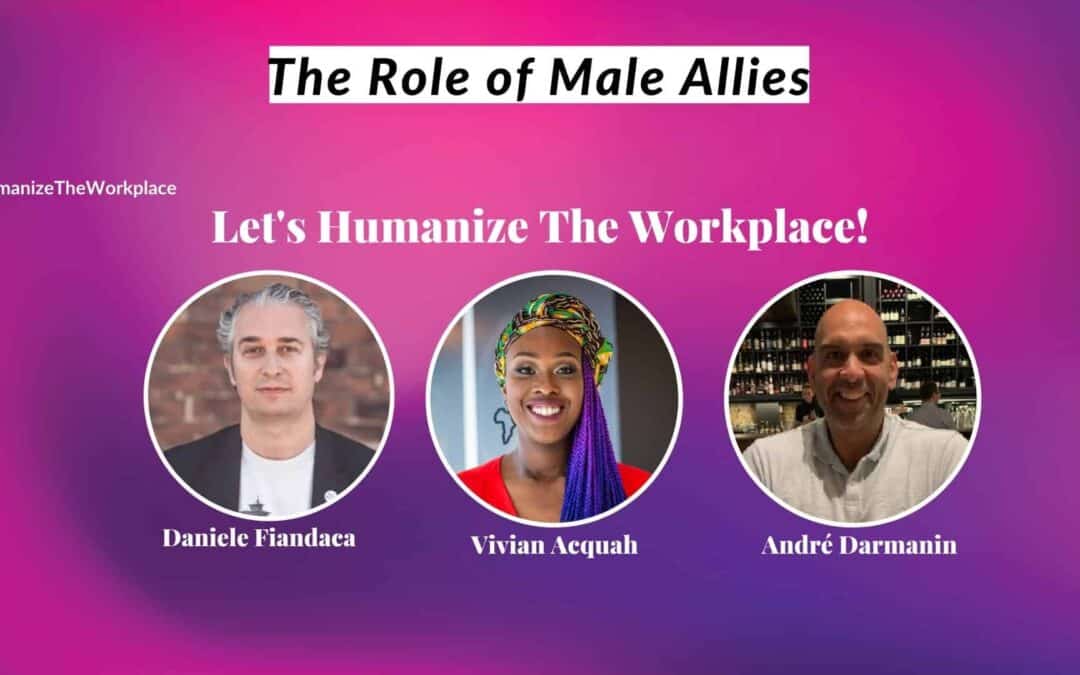
In the latest episode of “Humanize the Workplace,” hosted by Vivian Acquah, the role of male allies in promoting inclusive leadership, equity, and cultural intelligence took center stage. With thought-provoking insights from Daniele Fiandaca and André Darmanin, this episode provided a platform to delve into the challenges, triumphs, and evolving responsibilities of male allies in the workplace.