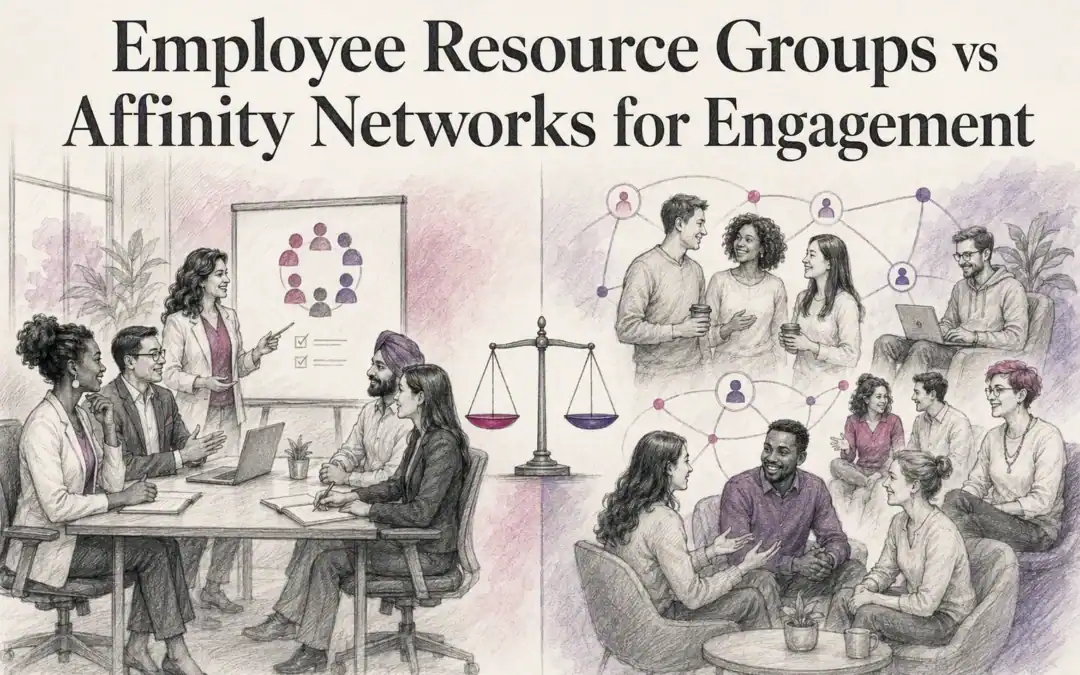
Employee Resource Groups vs Affinity Networks for Engagement
Summary: Employee Resource Groups are formal, goal-driven groups that boost participation, retention, and leadership visibility, especially when structured with clear goals and sponsorship. Affinity networks are informal, community-led groups that build trust quickly and are easier to join but may struggle with policy influence. Leaders should choose ERGs for measurable impact and affinity networks for quick connection, tailoring governance to their needs.
Leaders trying to lift belonging and participation face a clear tradeoff. ERGs usually work best as formal engagement infrastructure, while Affinity Networks fit low-friction community and early trust-building. Many teams now weigh Affinity Networks against ERGs because the model shapes voice, visibility, and uptake. This comparison draws on common HR and DEI practice to show how Affinity Networks, Employee Networks, sponsorship, governance, and DEI Strategies affect engagement.
Employee Resource Groups vs Affinity Networks for Engagement: At a Glance
| Employee Resource Groups | Affinity Networks | |
|---|---|---|
| Structure | Formal, chartered, and goal-driven | More informal and community-oriented |
| Sponsorship | Usually executive-sponsored | May be informal or lightly sponsored |
| Primary purpose | Belonging, voice, development, and DEI alignment | Connection, peer support, and belonging |
| Engagement strengths | Strong for participation, retention, and leadership visibility | Fast trust-building and low-barrier participation |
| Governance burden | Moderate to high | Lower |
| Best for | Mature DEI programs needing measurable impact | Organizations starting or simplifying employee connection efforts |
How Employee Resource Groups and Affinity Networks Compare
Employee Resource Groups
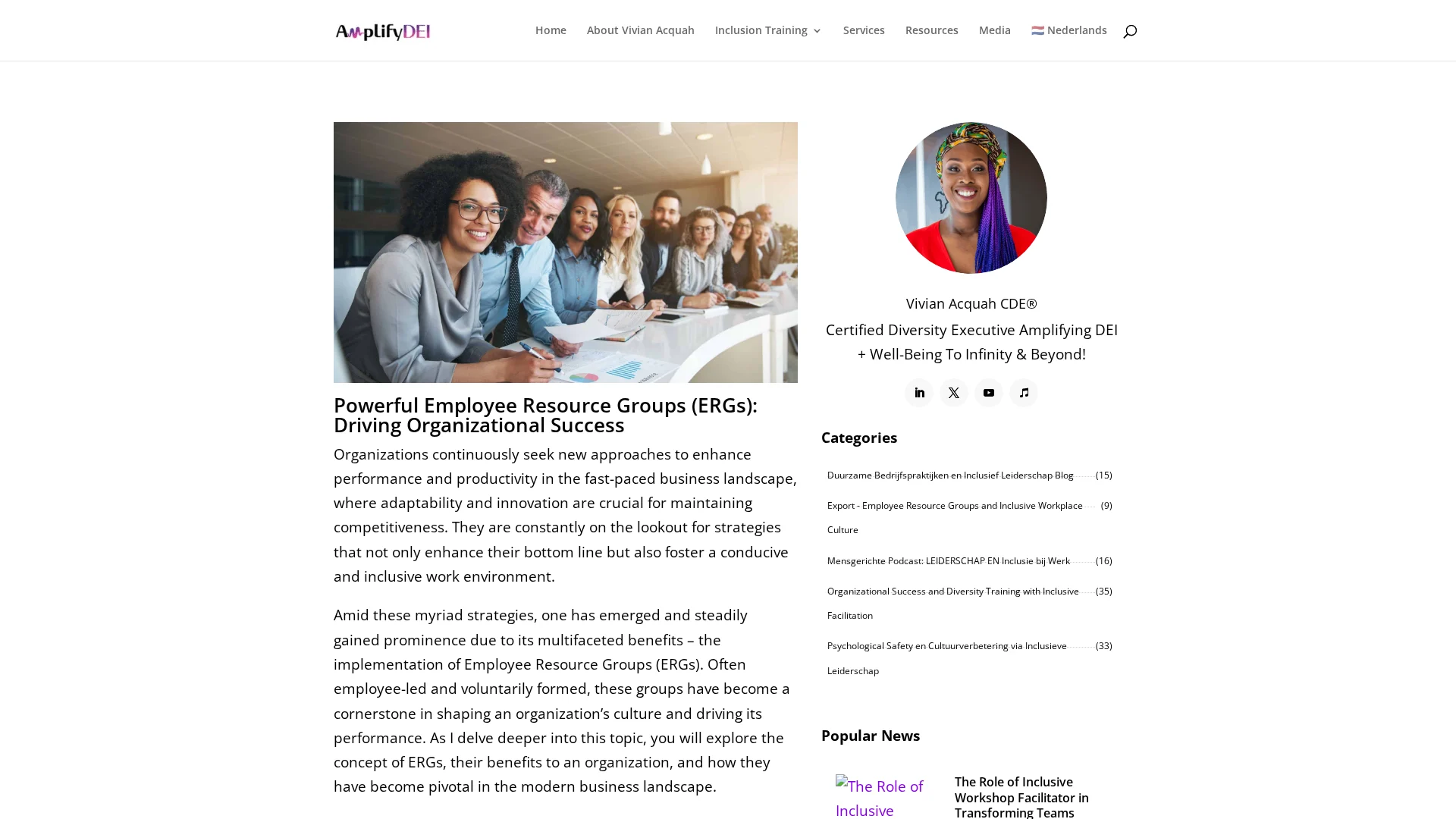
ERGs are formal, employee-led groups built to support belonging and business goals. Research from NASA ERG guidance shows they often help with development, retention, and leadership connection, so they fit mature DEI programs that need clear structure and measurable impact.
Affinity Networks
Affinity networks are lighter, community-led groups built around shared identity, interest, or experience. They suit teams that want faster trust-building and easier participation, especially early in their inclusion work, with a more informal model than chartered groups.
How Structure Changes Engagement
Why Formality Can Increase Participation
Formal ERGs often get better turnout because they feel real. A charter, budget, sponsor, and clear roles reduce confusion. People know who can join, what the group does, and how ideas move up. Harvard Business School notes that ERGs work best when they balance formal support with everyday connection HBS research. Formal setup also helps leaders protect time, track goals, and keep momentum when volunteer leads change.

Why Lighter Networks Can Feel More Accessible
Affinity networks often feel easier to join because they ask less upfront. No election, no committee, no long plan. That lowers the social risk for new members, allies, and busy managers. A Colorado state ERG guide also stresses that open participation supports inclusion and belonging state guidance. The tradeoff is reach. Light networks can create trust fast, but they may struggle to win budget, executive attention, or policy change.
Also Read: https://amplifydei.com/7-benefits-of-dei-coaching-for-organizations
Governance, Risk, and Measurement
Good engagement programs do not run on energy alone. They need rules, owners, and proof.
What Leaders Need to Measure
Track more than attendance. Measure participation rate, repeat attendance, leader pipeline, budget use, and whether insights led to policy, talent, or culture changes. Korn Ferry notes ERGs now sit at the intersection of engagement, retention, and business results in its global ERG survey.
| Metric | Why it matters |
|---|---|
| Participation depth | Shows real pull, not one-time interest |
| Retention and mobility | Connects groups to talent outcomes |
| Action taken | Proves feedback changed something |
If you only count events, you are measuring activity, not impact.
Where Governance Protects the Program
Strong governance lowers risk. Harvard Business School highlights four tensions – formality, audience, identities, and resilience – that shape whether ERGs thrive in hard moments in its Working Knowledge research.
- Set a clear charter.
- Define sponsor duties.
- Create approval paths for budget and events.
- Review membership and privacy rules.
- ERGs need tighter governance.
- Affinity networks can stay lighter, but still need boundaries.
Also Read: https://amplifydei.com/category/blog
Which Should You Choose for Employee Engagement?
- Choose ERGs when you need accountability. Pick ERGs if you want clear goals, budgets, sponsors, and reporting. That structure helps leaders act on employee insight instead of just hearing it. Harvard Business School notes strong ERGs balance informal support with formal action, while Gallup says managers drive 70% of team engagement variance Harvard research Gallup data.

- Choose affinity networks when you need accessibility. Use affinity networks when your goal is easy entry, fast peer connection, and broad participation. They work well in new, global, or low-maturity programs where employees first need trust and community.
If engagement is low, start with access. If follow-through is weak, move to ERGs.omepage
Need clearer ERG or affinity network strategy? Partner with Amplify DEI to build governance, sponsorship, and engagement that lasts.
Frequently Asked Questions
Q1: What are the key differences between Employee Resource Groups and Affinity Networks for workplace engagement?
ERGs usually have formal goals, leaders, budgets, and executive sponsors. Affinity networks are often looser, social, and interest-led. ERGs drive business impact more directly, while affinity networks can boost connection fast with less structure.
Q2: How can organizations effectively implement and support different types of Employee Resource Groups globally?
Start with one governance model, then adapt for local laws, culture, and language. Set clear charters, funding rules, and sponsor roles. Give regional leaders room to tailor events and priorities without losing global standards.
Q3: What leadership roles are essential for the success of Employee Resource Groups to maximize employee engagement?
Strong ERGs need an executive sponsor, ERG chair, local chapter leads, and HR or DEI support. Each role should own decisions, budget, communication, and metrics so the group does not rely on volunteer energy alone.
Conclusion
ERGs usually drive stronger engagement when they have clear goals, sponsors, and governance. Affinity networks fit lighter community-building needs. Recent CHRO research and Harvard analysis both point to the same truth: structure shapes impact.