
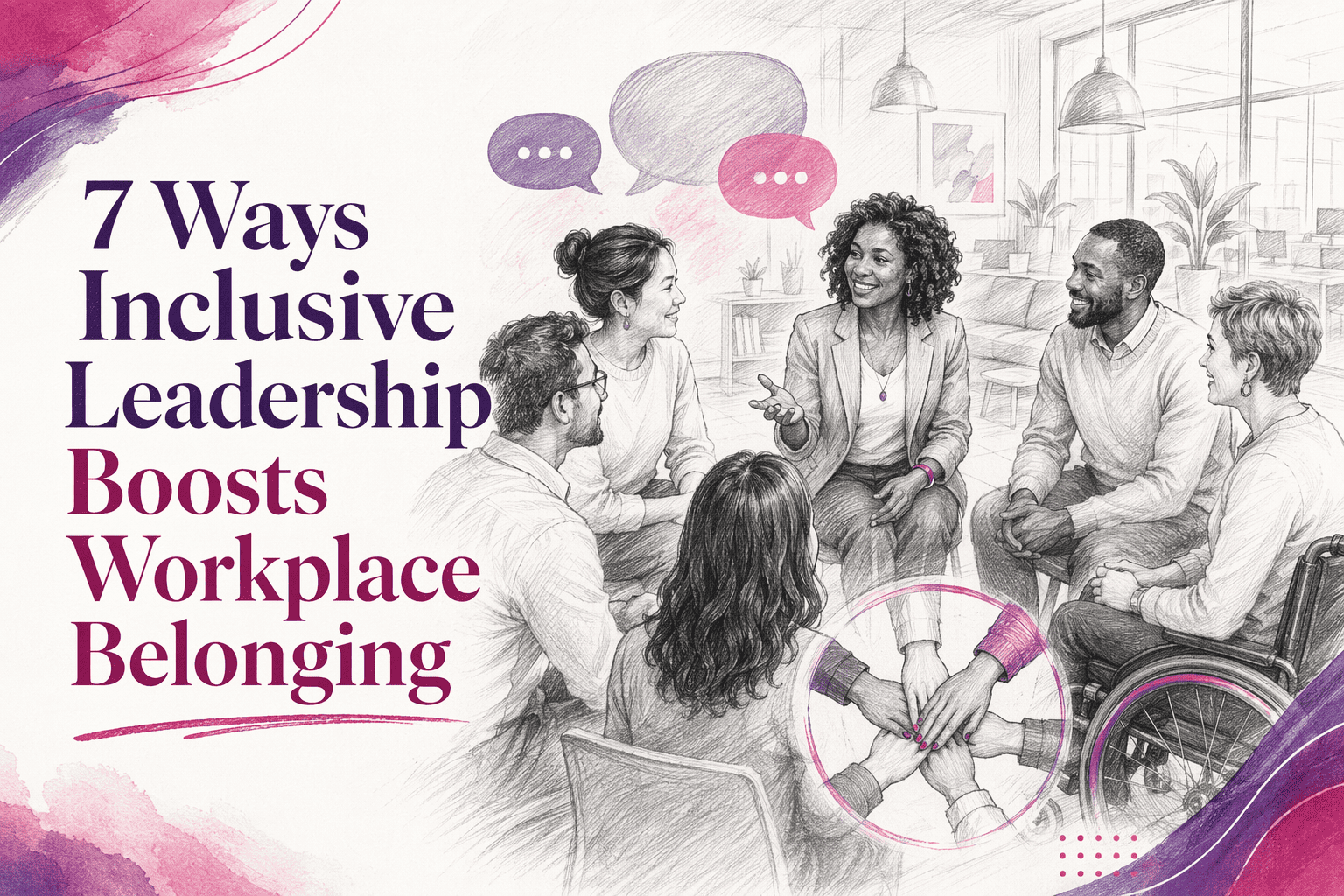
Summary: Inclusive leadership boosts belonging by fostering trust, ensuring everyone’s voice is heard, and recognizing individuals personally. Leaders can create psychological safety, make participation equitable, and use transparent decision-making to strengthen team cohesion. Starting with small habits like inclusive meetings or personalized recognition can significantly improve team trust and engagement. Measuring participation and feedback helps track progress and identify belonging gaps.
A warm intro, a first-meeting invite to speak, and a clear buddy can shape belonging fast. Many teams say they care, but default habits still sideline quiet, new, or underrepresented staff. This list covers seven Inclusive Leadership Strategies that build voice, safety, fairness, recognition, and accountability. These Inclusive Leadership Strategies reflect research and practice from leading DEI frameworks. We chose Inclusive Leadership Strategies tied to real moments at work, so they also support stronger Inclusive Leadership Development.
Quick Comparison of the 7 Ways
| Way | Best for | Belonging impact | Where to start |
|---|---|---|---|
| Create psychological safety | Teams that need trust, openness, and honest communication | Very high | Leader vulnerability and no-blame responses |
| Make every voice visible | Meetings, brainstorms, and decision-making sessions | Very high | Meeting norms and turn-taking structures |
| Recognize people in ways that feel personal | Boosting morale and reinforcing team connection | High | Specific praise tied to observable behavior |
| Use fair, transparent decision-making | Hiring, promotions, feedback, and stretch assignments | High | Shared criteria and documented decisions |
What to know about inclusive leadership
Inclusive leadership means leading in a way that helps people feel seen, respected, and safe to speak up. It shows up in small daily actions, like who gets heard in meetings, who gets feedback, and who gets chances to grow.
That matters because belonging shapes real business results. When people feel they belong, they engage more, work better with others, and stay longer.
Belonging is not a soft extra. It affects team trust, performance, and retention.
1. Create psychological safety
People belong faster when they can speak honestly without fear. Psychological safety at work means people can ask questions, raise concerns, and admit mistakes without getting shut down. Google’s Project Aristotle found it was the top factor in team effectiveness, and Amy Edmondson’s research ties it to learning behavior.

Highlights
- Normalizes questions and respectful disagreement
- Helps people flag risks early
- Makes meetings more open
Specs
- Best for: Teams that need trust and honest communication
- Belonging impact: Very high
- Where to start: Leader vulnerability and no-blame responses
- Role in culture: Creates the safety people need to join in
Pros
- Builds trust fast
- Surfaces problems early
Cons
- Takes steady follow-through
- Breaks fast if leaders punish dissent
This ranks first because every other inclusive leadership strategy works better when people feel safe enough to speak.
Also Read: Using Vr To Unlock Empathy
2. Make every voice visible
Belonging grows when people know their input matters. Inclusive leaders make space for more than the fastest or loudest voice, and Microsoft Research links agendas and follow-ups with more inclusive meetings.
Highlights
- Balances airtime
- Helps quieter and remote staff join in
- Shows all views are welcome
Specs
- Best for: Meetings, brainstorms, decisions
- Belonging impact: Very high
- Where to start: Meeting norms and turn-taking
- Role in culture: Makes participation a team norm
Pros
- Better ideas
- More ownership
Cons
- Needs steady practice
- Can feel awkward at first
Voice ranks high because inclusive climate supports employee voice, and people stay engaged when ideas are heard and credited.
3. Recognize people in ways that feel personal
People feel they belong when leaders notice what makes them unique. Inclusive recognition means naming the real action, strength, or care someone brought, not tossing out generic praise. Gallup says authentic recognition supports belonging, and unfair recognition can hurt inclusion across teams.

Highlights
- Makes employees feel seen as individuals
- Reinforces strengths and contributions
- Improves morale and loyalty
- Supports a more human team culture
Specs
- Best for: Boosting morale and reinforcing team connection
- Belonging impact: High
- Where to start: Specific praise tied to observable behavior
- Role in culture: Makes contribution visible and valued
Pros
- Low-cost and easy to implement
- Improves motivation
- Strengthens emotional connection to the team
Cons
- Generic praise can feel empty
- Recognition must be equitable, not just frequent
It ranks here because personalized appreciation is one of the fastest ways to show people they matter.
4. Use fair, transparent decision-making
Belonging drops fast when decisions feel biased or random. People trust leaders more when hiring, promotions, feedback, and stretch work follow clear rules. SHRM notes that transparency and accountability help reduce bias, and SHRM research shows transparent pay decisions build trust.
Highlights
- Reduces perceptions of bias
- Clarifies expectations for advancement
- Builds trust in leadership decisions
- Supports equity in performance management
Specs
- Best for: Hiring, promotions, feedback, and stretch assignments
- Belonging impact: High
- Where to start: Shared criteria and documented decisions
- Role in culture: Makes inclusion feel credible and consistent
Pros
- Builds trust in leadership
- Helps reduce bias
- Improves fairness and clarity
Cons
- Requires more structure and documentation
- May expose inconsistent practices that leaders must fix
This ranks here because fairness makes inclusive leadership development real, not just promised.
How to choose the right inclusive leadership strategy
Pick based on your biggest belonging gap, not what sounds best.
- Silence in meetings or low trust – focus on psychological safety, better feedback, and leader vulnerability.
- Weak onboarding or hybrid drift – prioritize connection rituals, clear onboarding, and steady recognition.
- Uneven opportunity – choose fair decision-making, growth access, and clear promotion rules.
- Strong engagement but weak trust – increase transparency on decisions, changes, and mistakes.
- Keep it simple – start with one weekly habit, like round-robin input or public recognition.
- Measure fit – track participation, retention, manager trust, and whether people feel safe speaking up.
Ready to turn inclusive leadership into daily team habits? Amplify DEI helps leaders build belonging through practical training, workshops, and strategy. Start with an expert-led plan that fits your culture.
Frequently Asked Questions
Q1: What are effective strategies for building a culture of belonging through inclusive leadership?
Set clear team norms, share decision power, ask for input often, and act on feedback. Train managers to spot bias, run fair meetings, and give equal access to stretch work.
Q2: How can managers measure belonging at work?
Use short pulse surveys, stay interviews, promotion data, and meeting feedback. Look for patterns by team, level, and identity group.
Q3: What is one quick first step leaders can take?
Start every team check-in by inviting all voices. Track who speaks, who gets credit, and who gets left out.